 Français






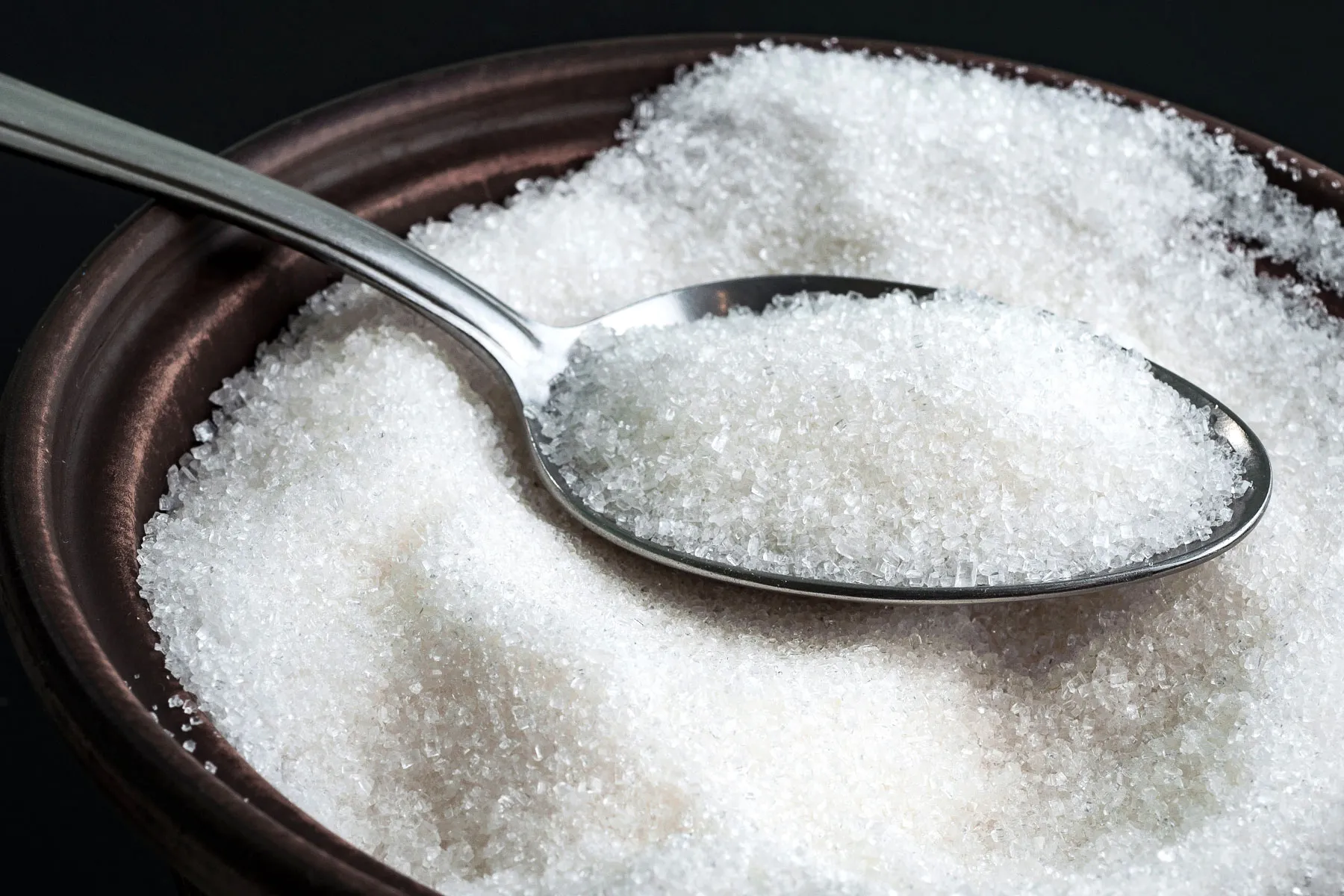
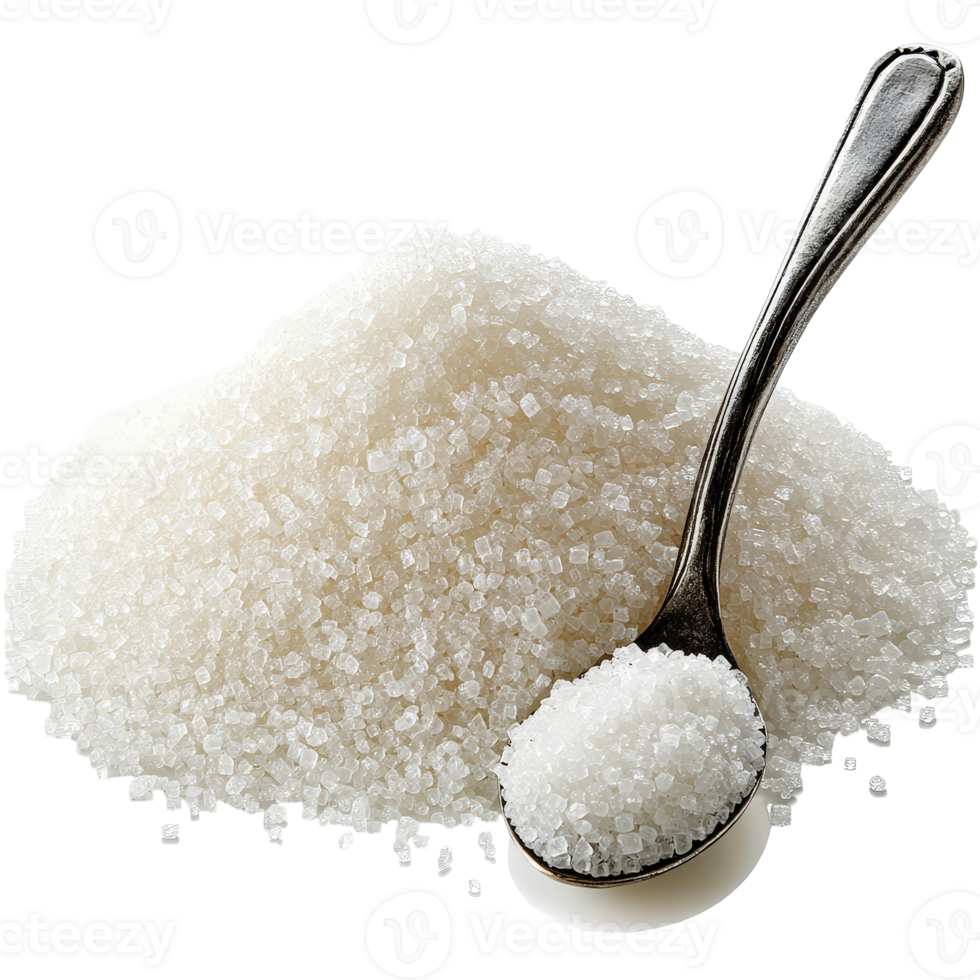
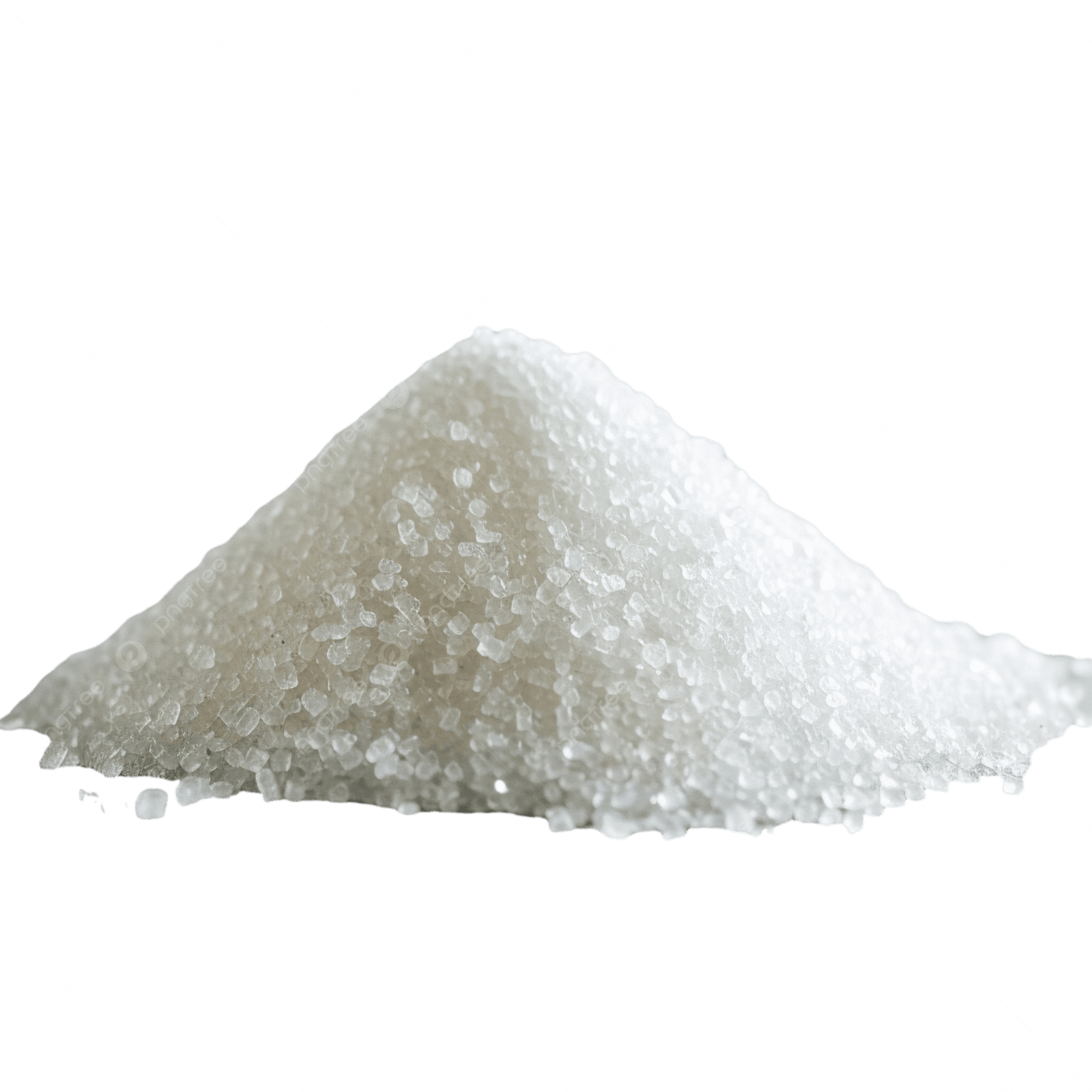
Sugar (चीनी khuli) 5Kg Packed by RD home Mart
₹250.00
Sugar (Sucrose)
Sugar is the common name for sucrose ($C_{12}H_{22}O_{11}$), a sweet, crystalline, and soluble carbohydrate used widely in food and beverages.
-
Type: Sucrose is a disaccharide, meaning it’s composed of two simpler sugars: glucose and fructose.
-
Source: It is primarily extracted and refined from sugarcane or sugar beets.
-
Function: It serves as a primary source of quick energy in the diet and is essential in cooking for sweetness, texture, and preservation. The body converts all dietary sugar into glucose for fuel.
Sugar: A Sweet Carbohydrate
Sugar is a general term for sweet-tasting, soluble carbohydrates, many of which are used in food. Scientifically, it refers to the simplest carbohydrates: monosaccharides and disaccharides.
Chemical & Structural Overview
-
Table Sugar (Sucrose): The refined white crystalline substance most commonly known as “sugar” is sucrose.
-
Formula: $C_{12}H_{22}O_{11}$
-
Structure: Sucrose is a disaccharide (double sugar) composed of one molecule of glucose and one molecule of fructose chemically bonded together.
-
-
Simple Sugars (Monosaccharides): These are the building blocks, including:
-
Glucose: The body’s primary and most readily used form of energy.
-
Fructose: Found naturally in fruit and honey (fruit sugar).
-
Galactose: A component of lactose (milk sugar).
-
Source and Production
-
Commercially, the vast majority of refined sugar (sucrose) is extracted from two main plant sources:
-
Sugarcane: A giant grass grown in tropical and subtropical regions.
-
Sugar Beet: A root crop grown in temperate regions.
-
Function in Food & Diet
-
Sweetener: The primary function, used globally to enhance the flavor of beverages and food.
-
Energy Source: Sugar is a form of carbohydrate, providing 16 kJ (4 calories) of energy per gram. The body breaks it down into glucose for cellular energy.
-
Culinary Role: In baking and cooking, it also provides bulk, texture, and color (through caramelization and the Maillard reaction) and acts as a preservative.











 Home
Home  Whishlist
  Promotion
  Checkout
  Account
Reviews
There are no reviews yet.